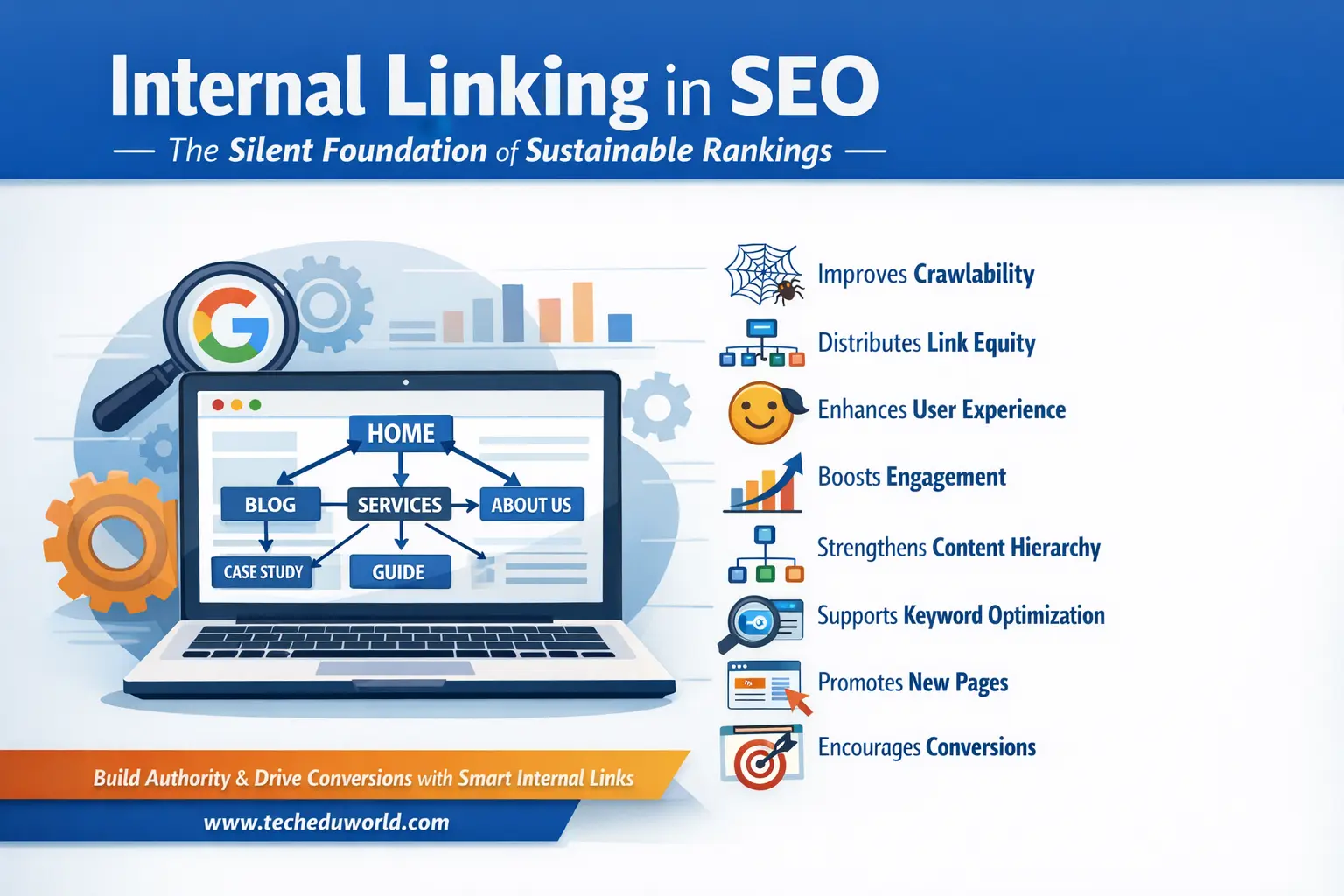
SEO is the unseen foundation of a strong online presence today. Every business wants to grow in an increasingly competitive digital market. While many focus on content and backlinks, internal linking remains one of the most powerful yet underrated aspects of SEO services.
Without a solid internal linking structure, even high-quality content can struggle to rank. Internal links connect your website’s pages, guide users, help search engines understand your site structure, and distribute authority efficiently.
What Is Internal Linking in SEO?
Internal linking refers to linking one page of your website to another page on the same domain. Unlike external links that connect your site to the broader web, internal links strengthen your website from within.
Think of your website as a city. Internal links are the roads that connect neighborhoods, ensuring no area remains isolated. Pages without internal links—often called orphan pages—are ignored by both users and search engines.
Internal links appear in multiple forms:
- Navigation links (menu, header, sidebar)
- Contextual links within content
- Footer links
- Editorial in-content references
When implemented strategically, internal links unify your website, improve discoverability, and strengthen topical authority.
Why Internal Linking Matters More Than You Think
Search engines rely on internal links to crawl, understand, and rank pages. Each internal link signals importance, relevance, and hierarchy within your website.
According to Google’s own documentation, internal linking plays a key role in determining site structure and page value. This is why professional digital marketing strategies always include a well-planned internal linking framework.
Without internal links, even valuable pages may remain invisible to search engines, limiting your overall SEO potential.
Core Benefits of Internal Linking
1. Improves Crawlability
Internal links create clear paths for search engine bots, allowing them to crawl your site efficiently. This ensures faster indexing and prevents important pages from being overlooked.
This is especially critical for content-heavy platforms like blogs, e-commerce stores, and learning portals such as TechEduWorld’s blog.
2. Distributes Link Equity
Pages with higher authority—such as the homepage or popular blog posts—can pass link equity to newer or weaker pages. This balanced distribution improves rankings across the entire domain.
3. Enhances User Experience
Internal links help users discover relevant information effortlessly. When visitors find what they need quickly, bounce rates decrease and trust increases.
A well-interlinked website feels intuitive, structured, and reliable—key factors in building long-term audience loyalty.
4. Boosts Engagement & Page Views
Strategic internal links encourage users to explore more pages, increasing session duration and page views. These engagement signals positively influence SEO performance.
5. Strengthens Content Hierarchy
Internal linking helps organize content into topic clusters and pillar pages. This structure clearly communicates subject expertise to search engines.
For example, a central SEO guide can link to related articles on on-page SEO, technical SEO, and content optimization, reinforcing topical relevance.
6. Supports Keyword Optimization
Anchor text within internal links provides contextual signals about the linked page. Descriptive, natural anchor text improves relevance without appearing manipulative.
7. Promotes New & Hidden Pages
New content often struggles to gain visibility. Linking it from established pages helps search engines discover and index it faster while guiding users naturally.
8. Encourages Conversions
Internal links can guide users from informational content to conversion-focused pages such as service pages, contact forms, or consultations.
For instance, a blog post can seamlessly guide readers toward a contact or inquiry page, turning curiosity into action.
Quick Tips for Better Internal Linking
- Keep links contextually relevant
- Use natural, descriptive anchor text
- Avoid excessive links on a single page
- Maintain a clear site hierarchy
- Link new content with older authoritative pages
- Ensure no orphan pages exist
- Regularly audit for broken links
- Balance navigational and contextual links
Closing Thoughts
Internal linking is not a one-time task—it’s a long-term SEO investment. It strengthens site architecture, improves crawlability, enhances user experience, and drives sustainable growth.
When done correctly, internal linking reduces reliance on external backlinks and builds a resilient SEO foundation that adapts to algorithm changes.
If you want to build a future-proof website with strong rankings, authority, and conversions, mastering internal linking is non-negotiable.
Comments
Присоединяйтесь к Телеграмм группе Москва объявления!
Здесь вы можете легко и быстро публиковать ваши предложения по Москве и МО.
Хотите что-то продать или купить?
Нужна работа или услуги? Всё это у нас!
#объявления #Москва #МосковскаяОбласть #МО
#ОбъявленияМосковская_Область
Будьте в курсе всех актуальных объявлений в
вашем регионе!
Группы других городов России описаны здесь!!
объявления России
Присоединяйтесь к Телеграмм группе Московская область объявления!
Здесь вы можете легко и быстро публиковать ваши предложения по Москве и области.
Хотите что-то продать или купить?
Нужна работа или услуги?
Всё это у нас! #объявления #Москва #МосковскаяОбласть #МО
#Объявления_Московская_Область
Будьте в курсе всех актуальных предложений в вашем регионе!
Группы остальных городов России можно посмотреть по ссылке!!!
объявления России