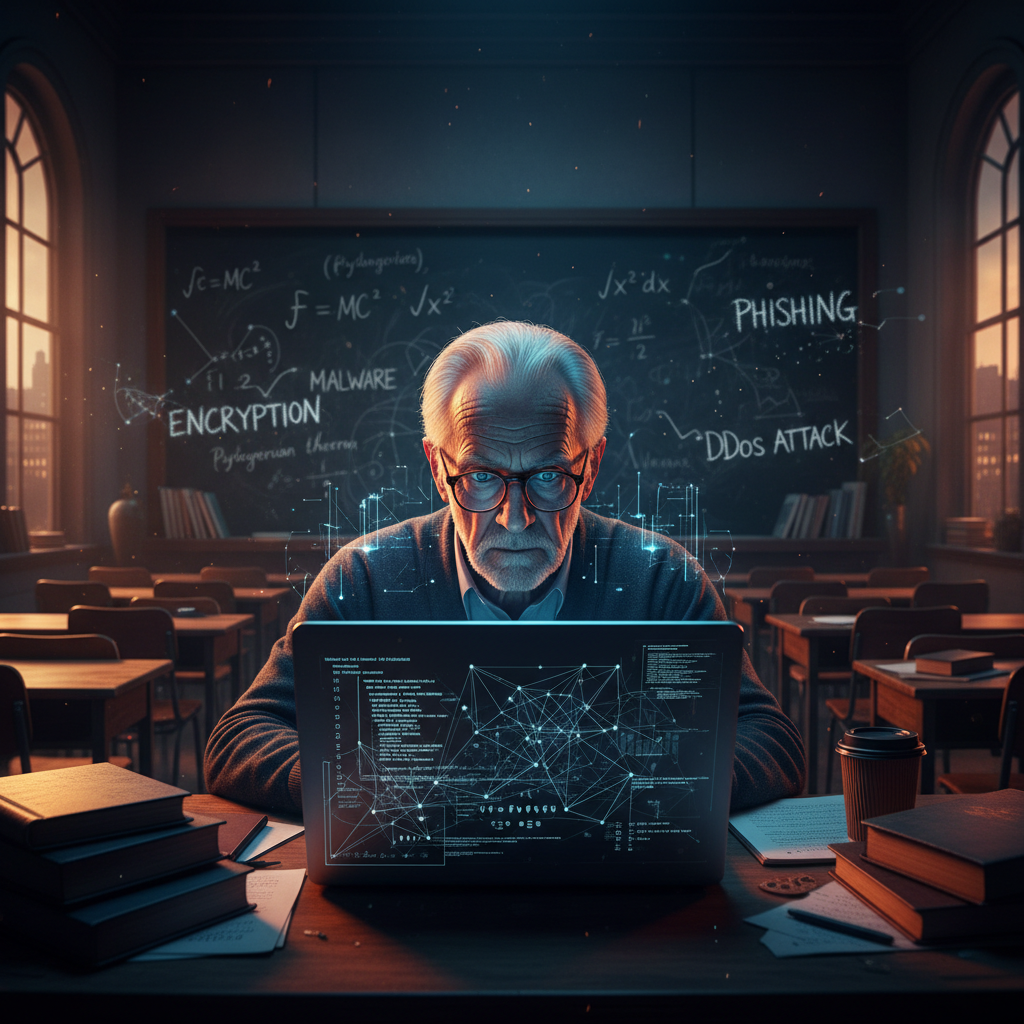
The messy reality of the modern classroom
I’ve spent fifteen years writing for tech firms and educational consultants, and I’m going to be blunt. Most schools are currently a disaster waiting to happen. We keep tossing Chromebooks and tablets at kids like they’re candy, but the people standing at the front of the room? They’re often flying blind. If schools don't start training teachers in AI and cybersecurity immediately, we’re looking at a massive data breach or a generation of kids who think a hallucinating chatbot is the ultimate source of truth. It’s a mess.
Look, I get it. Teachers are already overworked. They’re dealing with lesson plans, grading, and that one kid who won't stop clicking his pen. Adding 'AI prompt engineering' and 'multi-factor authentication protocols' to their plate feels like a slap in the face. But here’s the kicker: ignoring this doesn't make it go away. It just makes the eventual fallout way more expensive.
AI isn't a fad, it's a permanent guest
Remember when people thought the internet was a phase? Yeah. AI is that, but on steroids. Students are already using it. They’re using it to write essays, solve math problems, and probably generate weird memes of their principals. If a teacher doesn't understand how these models work, they can’t actually teach. Period.
I remember a client of mine—a high school principal—who was convinced they could just ban AI. One month later, they realized half the senior class was using LLMs to bypass every writing assignment. The teachers were frustrated because they couldn't tell what was real and what wasn't. They felt cheated. But they didn't have the training to pivot their teaching style to incorporate AI or even detect its misuse effectively. We need to stop pretending a 'ban' is a strategy. It's a surrender.
The security nightmare nobody talks about
Cybersecurity is the even scarier part. Schools are basically giant buckets of sensitive data—social security numbers, home addresses, medical records. Hackers love them. They’re soft targets. Most teachers I know are using the same password for their email that they used in 2012. It’s terrifying.
Training isn't just about 'don't click that link.' It's about understanding how phishing has evolved. With AI, a phishing email doesn't look like a Nigerian prince anymore. It looks like a perfectly written memo from the superintendent. If a teacher clicks, the whole district is cooked. I’ve seen this go wrong where a single infected laptop shut down a district for a week. No grades. No payroll. Just chaos. Honestly, it’s a miracle it doesn't happen more often.
What actual training should look like (and why it usually sucks)
Most professional development is boring. It’s a guy in a suit with a 40-slide PowerPoint. That’s not what I’m talking about. Schools need hands-on, gritty workshops. Teachers need to play with the AI. They need to see how easy it is to create a deepfake or how a simple browser extension can scrape student data. They need to be scared, just a little bit, to take it seriously.
- AI Literacy: How to spot a hallucination and how to use AI to actually save time on grading.
- Data Privacy: Understanding why 'free' classroom tools are usually selling student data.
- Threat Detection: Spotting AI-generated scams that target school staff.
It’s about building a culture of skepticism. If a teacher gets a weird request for student files, their first instinct should be 'wait, let me verify this,' not 'let me click this so I can go home on time.' We’re asking them to be the first line of defense. It’s only fair we give them the armor.
The cost of doing nothing
Some administrators will complain about the budget. 'We don't have the money for extra training days,' they’ll say. My response? You definitely don't have the money for a ransomware payout. You don't have the money for a lawsuit when a student's private data ends up on the dark web because a teacher used a sketchy 'AI lesson planner' that wasn't vetted.
Here's the thing. We’re already behind. The tech is moving at light speed, and school policy is moving at the speed of a 1990s dial-up modem. It's frustrating. It's annoying. But it's the reality. If we keep treating AI and cybersecurity like 'IT problems' instead of 'education problems,' we’re failing the very people we’re supposed to be preparing for the future. No-brainer, right? Apparently not for everyone.
Look, I've written enough of these pieces to know that some districts will wait until a disaster happens to take action. Don't be that district. Get the teachers in a room, show them how the world has changed, and give them the tools to handle it. It’s not just about tech; it’s about survival in a digital world that’s getting weirder by the second.
Comments
Be the first to comment.